Stay cool and in control.
Hot weather can increase your electricity usage. Explore simple ways to manage your energy use while staying comfortable. Explore energy-saving tips
Stay cool and in control.
Hot weather can increase your electricity usage. Explore simple ways to manage your energy use while staying comfortable. Explore energy-saving tips

Understanding demand charges
A demand charge is a fee based on the highest amount of electricity your business uses at any one moment. This charge is applied by your local utility Transmission and Distribution Service Provider (TDSP) and regulated by the Public Utility Commission of Texas (PUCT). This charge appears on your Cirro bill.
Business electricity bills differ from residential bills and include two main components:
Demand charges are calculated based on the highest 15-minute interval of electricity use during your billing cycle, typically when several large systems or pieces of equipment power on at once.
The demand charge is combined with other delivery charges and appears as one line item.
You can find additional details by visiting the PUCT’s rates and tariffs page
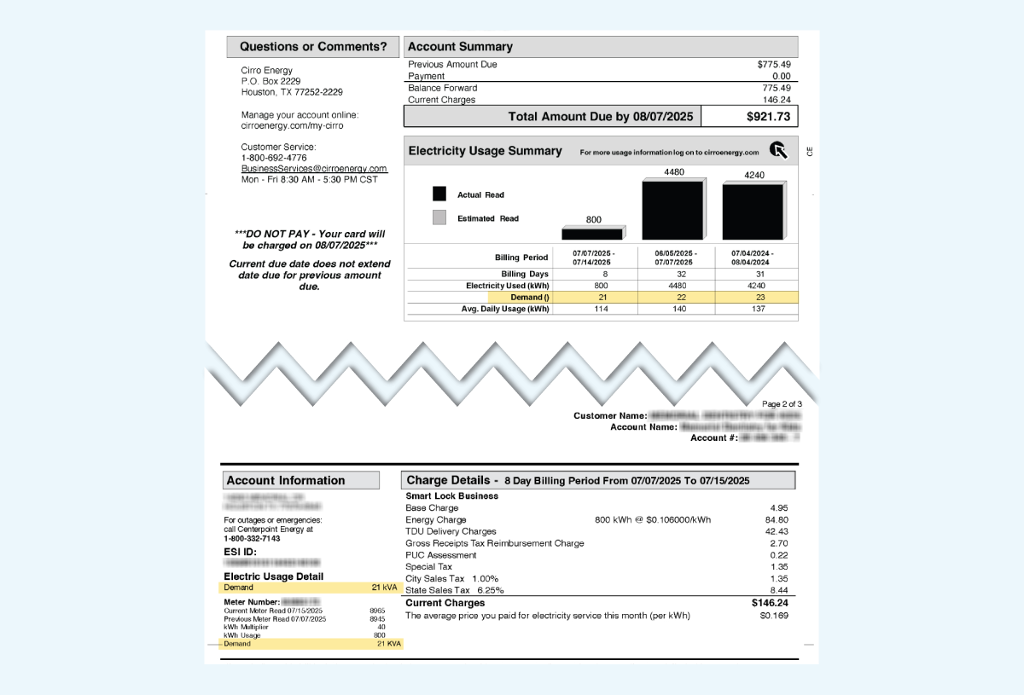
Your TDSP may still apply demand charges until your electric meter is fully de-energized. Even if your business is mostly shut down, using electricity for just 15 minutes can set a new peak demand for the month.
Energy charges reflect the total amount of electricity your business uses over time, measured in kilowatt-hours (kWh) . Demand charges are based on your highest rate of usage during any 15-minute window, measured in kilowatts (kW) or kilovolt-amperes (kVA) . Think of it like driving: Energy is the total distance, and demand is your top speed.
The demand charge is based on your business's highest 15-minute interval of energy use during the billing cycle. This number is then multiplied by the rate in your TDSP’s tariff.